

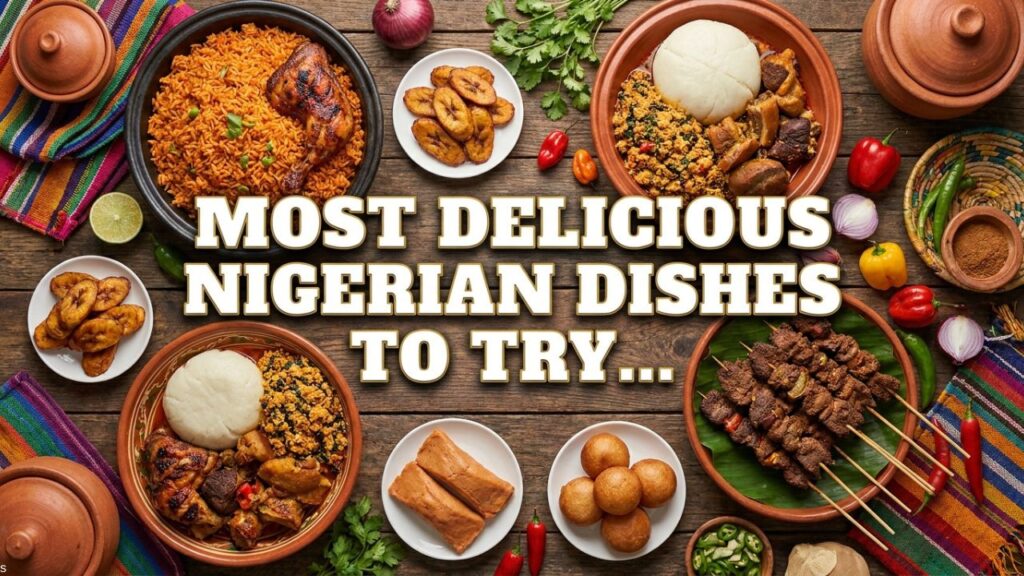
Nigerian food is not just jollof rice. If you are introducing someone to the country through food, these Nigerian dishes to try show the range of our soups, rice meals, street food, swallows, snacks, and regional flavours.
Nigerian food to try depends on where you are. Lagos, Abuja, Calabar, Enugu, Ibadan, Port Harcourt, Kano, and Benin can all give you different food memories.
Traditional Nigerian food is rich because the country is large. The best plate for one traveller may be smoky party jollof, while another person may remember afang soup, suya, or amala and ewedu.
Top 10 Nigerian Dishes to Try
1. Jollof Rice
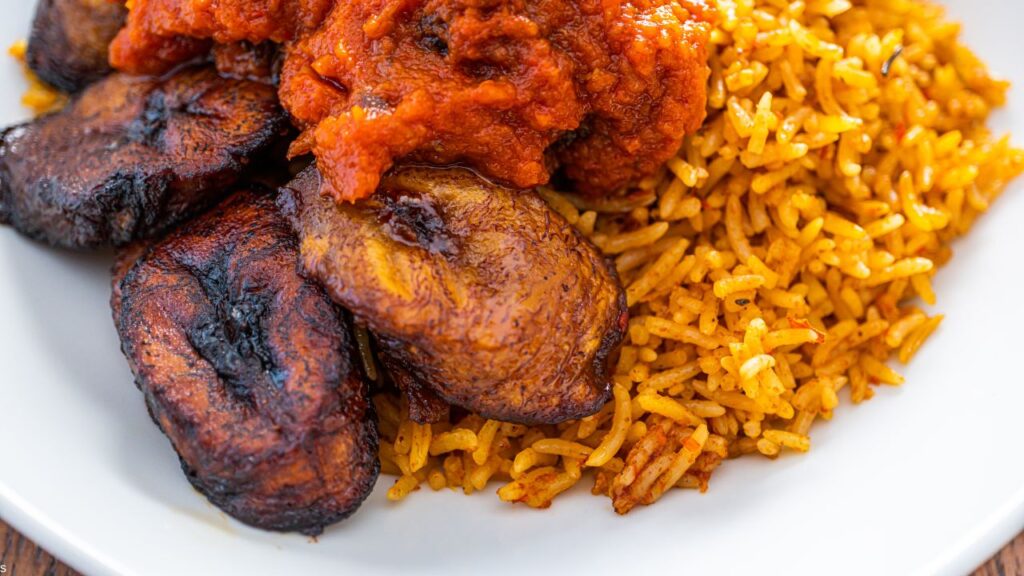
Jollof rice is the Nigerian dish many visitors hear about first, and it is still worth trying even if it feels familiar. The best versions are smoky, tomato-rich, spicy, and served with chicken, beef, fish, salad, or fried plantain.
Tourists should try party-style jollof if they can, because the flavour is often deeper than everyday restaurant rice. It is a good starting point before moving into soups and swallows.
2. Egusi Soup and Pounded Yam
Egusi soup is made with melon seeds and cooked with pepper, vegetables, palm oil, meat, fish, or stockfish depending on the cook. When served with pounded yam, it becomes one of the most filling Nigerian dishes to try.
This is best for travellers who want to understand Nigerian swallow culture. Eat slowly because it can be heavy, especially if you are not used to rich soups.
3. Suya
Suya is spicy grilled meat coated with yaji pepper and usually served with onions, tomatoes, cabbage, and extra spice. It is one of the most popular Nigerian street food experiences because it is smoky, social, and easy to share.
Try suya from a busy, trusted spot in the evening. If you do not like too much pepper, ask for the spice on the side.
4. Afang Soup
Afang soup is a vegetable soup associated strongly with the south-south, especially Cross River and Akwa Ibom food culture. It is rich, leafy, savoury, and often cooked with meat, seafood, periwinkle, or stockfish.
This is one of the best Nigerian dishes for tourists who want something regional and memorable. It is usually eaten with swallow, so ask for a small portion first if you are new to it.
5. Amala and Ewedu
Amala and ewedu is a Yoruba classic made with yam flour swallow, ewedu soup, stew, and often gbegiri. The combination has a soft texture and a deep pepper-stew flavour that makes it different from rice-based meals.
It is best tried in a proper local spot, especially in Lagos or Ibadan. If you want the full experience, add assorted meat, but keep your portion realistic.
6. Efo Riro
Efo riro is a rich vegetable stew made with leafy greens, pepper, palm oil, meat, fish, or stockfish. It is bold, savoury, and flexible because it can work with rice, yam, plantain, or swallow.
This is a good Nigerian food to try if you want vegetables but still want strong flavour. It is also easier for some visitors than heavier soups.
7. Pepper Soup
Pepper soup is a spicy broth made with fish, goat meat, chicken, or assorted meat. It is light compared with egusi or banga, but the spice can be intense.
Tourists often enjoy it in the evening or on rainy days. Ask about pepper level before ordering because the name is not a joke.
8. Moi Moi
Moi moi is steamed bean pudding made with blended beans, pepper, onions, oil, and sometimes egg, fish, or corned beef. It can be eaten alone or served with jollof rice, pap, custard, or bread.
It is one of the Nigerian dishes to try if you want something softer and less intimidating than swallow. It also works well for breakfast or as a side dish.
9. Akara
Akara is fried bean cake, usually eaten for breakfast with pap, bread, custard, or garri. It is crispy outside, soft inside, and common across many parts of Nigeria.
Try it fresh and hot from a busy morning vendor. It is simple, cheap, and one of the easiest traditional Nigerian food experiences for visitors.
10. Banga Soup
Banga soup is made from palm fruit extract and is especially loved in the Niger Delta. It has a deep, rich flavour and is often served with starch, rice, or swallow.
This is a strong regional dish for travellers who want to move beyond jollof and suya. It can be oily and filling, so choose it when you have time to sit and enjoy the meal properly.
Popular Nigerian meals are usually filling, so visitors should start small before ordering multiple swallows, soups, and sides in one sitting.
If you enjoy West African food trips, compare this with our guide on top Ghanaian dishes to try. The similarities and differences make both food cultures more interesting.
Best Dishes by Region
In Lagos, look for jollof, suya, ewa agoyin, amala, seafood, and modern Nigerian restaurants. Lagos is best for variety because you can eat street food in the afternoon and still find polished restaurants at night.
In Abuja, suya, masa, grilled fish, rice dishes, and northern-influenced meals are easy to find. It is a good city for travellers who want a cleaner, calmer introduction to Nigerian food.
In Calabar and the south-south, focus on afang soup, edikang ikong, fisherman soup, banga, and seafood. These regional dishes are rich, vegetable-heavy, and perfect for travellers who want something beyond jollof.
In Ibadan and other Yoruba food centres, try amala, ewedu, gbegiri, local stews, and assorted meat. In Kano, look for tuwo, masa, kilishi, and suya if you want stronger northern flavours.
The best food in Nigeria is not always found in fancy restaurants. Some of the most memorable meals come from buka spots, roadside grills, family kitchens, and local canteens.
Nigerian street food is a big part of the experience. Suya, akara, puff-puff, roasted corn, bole, masa, and shawarma-style local wraps are easy ways to taste the country casually.
Best Nigerian Dishes for First-Time Visitors
Start with jollof rice if the person is new to Nigerian food. It is familiar enough for many travellers but still gives a strong Nigerian flavour when cooked well.
Egusi soup and pounded yam is a good second step because it introduces the swallow-and-soup style of eating. It is one of the Nigerian dishes to try if you want a proper local meal.
Suya is perfect for evenings, especially with onions, cabbage, tomatoes, and extra yaji. It is spicy, smoky, and easy to share.
If food is part of a wider travel plan, compare food-focused trips across West Africa before choosing where to spend your travel budget.
How to Eat Nigerian Food Like a Local
- Wash your hands before eating swallow.
- Ask about pepper level before ordering.
- Do not overload your plate if you are new to heavy soups.
- Try local drinks like zobo, kunu, or Chapman where safe.
- Eat suya from busy spots with fresh turnover.
- Ask locals for the best buka instead of relying only on hotel restaurants.
Nigerian dishes to try are more enjoyable when you understand the combinations. Egusi needs swallow, pepper soup works with yam or plantain, and akara can be breakfast or a snack.
Travellers planning a Ghana food comparison can also read our guide to the beautiful places to visit in Ghana and build a food-and-culture itinerary.
FAQs on Nigerian Dishes to Try
What is the most famous Nigerian dish?
Jollof rice is probably the most famous Nigerian dish internationally, but egusi soup, suya, pounded yam, and pepper soup are also major favourites.
What Nigerian food should a foreigner try first?
Start with jollof rice, suya, moi moi, akara, and pepper soup. Then move to egusi, afang, efo riro, or amala if you want deeper local flavours.
Is Nigerian food very spicy?
Many Nigerian dishes are spicy, but pepper level varies. Ask before ordering if you do not eat much pepper.
What is the best Nigerian street food?
Suya, akara, puff-puff, roasted corn, bole, and masa are among the best Nigerian street food options to try.
Which Nigerian soup should I try first?
Egusi is a good first Nigerian soup for many visitors because it is popular, filling, and widely available.
Final Advice
The best Nigerian dishes to try depend on your city, your spice tolerance, and whether you want rice, soup, swallow, or street food.
Start with the famous meals, then explore regional dishes. Nigerian food gets more interesting when you move beyond jollof.




Leave a Reply