

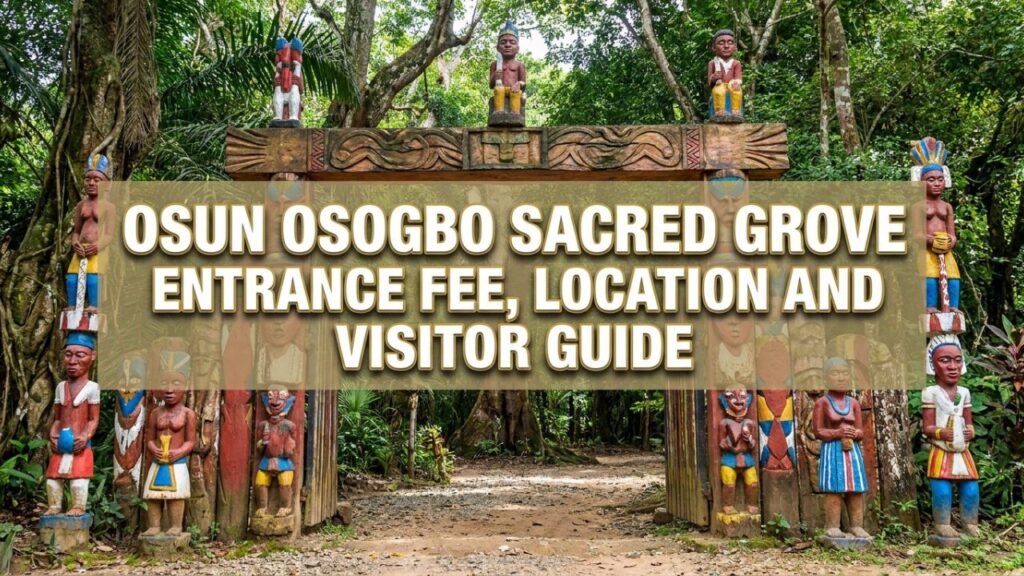
The Osun Osogbo Sacred Grove is one of Nigeria’s two UNESCO World Heritage Sites and the spiritual home of the Osun goddess. Set on the edge of Osogbo, the capital of Osun State, it is a dense patch of ancient forest filled with shrines, striking sculptures and the slow-moving Osun River.
Whether you are going for culture, history, photography or the annual festival, this guide explains the Osun Osogbo Sacred Grove entrance fee, how to get there, what you will see and the rules every visitor should respect.
Before you go: Entry fees are collected at the grove by the site managers and are not published online. Figures below come from recent visitor reports, so treat them as a guide and carry small notes in cash.
Osun Osogbo Sacred Grove at a glance
| Detail | Information |
|---|---|
| Location | Outskirts of Osogbo, Osun State |
| Status | UNESCO World Heritage Site since 2005 |
| Size | About 75 hectares of forest, with a buffer zone around it |
| Distance from Lagos | About 250 km (roughly 4 hours by road) |
| What to see | Osun River, around 40 shrines, sculptures and sacred spaces |
| Big event | Osun-Osogbo Festival, held every year around August |
Osun Osogbo Sacred Grove entrance fee
There is a small gate fee for each visitor, plus an extra charge if you want to take photos or videos. Visitors have reported a gate fee from about ₦1,000 per person, and photography charges of roughly ₦500 to ₦2,000 depending on whether you use a phone or a professional camera.
| Charge | Reported cost | Notes |
|---|---|---|
| Gate fee (per person) | From about ₦1,000 | Budget ₦1,000 – ₦3,000 in case it has gone up |
| Photography | About ₦500 – ₦2,000 | Phone cameras usually cost less than professional cameras |
| Tour guide | Agreed on the spot | Ask at the payment point and agree the price before you start |
Some worshippers and attendants inside the grove may ask for small offerings or tips. You are not obliged to pay, but polite refusal or a small amount in cash keeps things friendly.
A short history of the grove
The grove is one of the last remaining patches of primary high forest in southern Nigeria. For centuries it has been the sacred home of Osun, the Yoruba goddess of fertility, and a place where the people of Osogbo renew their bond with the goddess and their ruler, the Ataoja.
In the second half of the 20th century, the Austrian-born artist Susanne Wenger settled in Osogbo, became an Osun priestess and led a group of local artists known as the New Sacred Art movement. Over about forty years they restored old shrines and created large sculptures that now stand throughout the forest.
UNESCO added the grove to its World Heritage List in 2005, recognising both the forest and the living tradition that keeps it protected.
What to see inside the grove
The Osun River
The river winds through the grove and is believed to carry the blessings of the goddess. Its water often looks golden-brown. Many worshippers collect it, and the riverbank is where key rites take place during the festival.
Shrines and sacred spaces
The grove has around 40 shrines, sculptures and artworks, along with sacred spaces and worship points along the riverbank. Some areas are off-limits to visitors or restricted to initiates, so follow your guide’s direction.
Sculptures by the New Sacred Art movement
The tall, flowing cement sculptures and carved gateways are what make the grove unlike any other forest shrine. They are best seen in good daylight, so plan to arrive in the morning or early afternoon.
The suspension bridge and forest walk
A walk through the grove takes you along shaded forest paths and across the river. Allow at least one to two hours to see the main sites without rushing.
The Osun-Osogbo Festival
The Osun-Osogbo Festival is held every year over about twelve days in July and August, with the grand finale usually falling in August. Thousands of worshippers, tourists and members of the Yoruba diaspora travel to Osogbo for it.
The festival is colourful and crowded. If you plan to attend, book your hotel in Osogbo early, arrive at the grove early on the main day and keep your valuables secure. Outside the festival period, the grove is much quieter and better for a relaxed visit.
How to get to the Osun Osogbo Sacred Grove
From Lagos: Drive along the Lagos–Ibadan Expressway, then continue from Ibadan to Osogbo. The trip is about 250 km and usually takes around four hours, depending on traffic. Commercial buses to Osogbo leave from major parks such as Ojota.
From Ibadan: Osogbo is roughly a 90-minute to two-hour drive from Ibadan.
Within Osogbo: The grove is on the outskirts of the city, along the Osun River. Most taxi and ride drivers in Osogbo know it, and the trip from the city centre is short.
Rules and etiquette
The grove is a living place of worship, not just a tourist attraction. Visitors are expected to respect its customs.
- Read the notice board at the entrance, which lists the do’s and don’ts.
- Ask before taking photos of worshippers, priests or rituals.
- Do not touch or climb on the shrines and sculptures.
- Some customs restrict menstruating women from entering the shrine and river areas. Ask your guide if you are unsure.
- Dress modestly and wear comfortable shoes for the forest paths.
- Do not litter — the forest is protected.
Tips for a better visit
- Go in the morning, when the forest is cooler and the light is better for photos.
- Carry insect repellent and drinking water.
- Bring cash in small denominations for the gate, photography and any guide fee.
- Agree the guide’s price before the tour starts.
- Combine your visit with other Osun State attractions, such as Erin Ijesha Waterfall, about an hour’s drive away.
Frequently asked questions
How much is the Osun Osogbo Sacred Grove entrance fee?
Visitors have reported a gate fee from about ₦1,000 per person, plus a photography charge of around ₦500 to ₦2,000. Budget a little more in case prices have changed, and carry cash.
When is the best time to visit?
Any time of year works, but the dry season (November to March) means drier paths. Visit in August if you want to experience the Osun-Osogbo Festival, or outside August for a quieter trip.
Do I need a tour guide?
A guide is not compulsory, but it is strongly recommended. Guides explain the meaning of the shrines and sculptures and know which areas visitors may enter.
Can I take photos?
Yes, after paying the photography fee. Always ask before photographing people or ceremonies.
How long does a visit take?
Most visitors spend one to two hours. Allow longer if you want to take photos or talk with your guide about the history of the grove.
Final thoughts
The Osun Osogbo Sacred Grove is one of the most meaningful places you can visit in Nigeria. Go with cash, a guide and respect for local customs, and you will leave with a much deeper understanding of Yoruba culture.
Planning more trips? Read our guides to Ikogosi Warm Springs and Yankari Game Reserve.
Last checked: October 2026. Sources: UNESCO World Heritage Centre and recent visitor reports. Fees can change without notice, so confirm at the grove.




Leave a Reply