

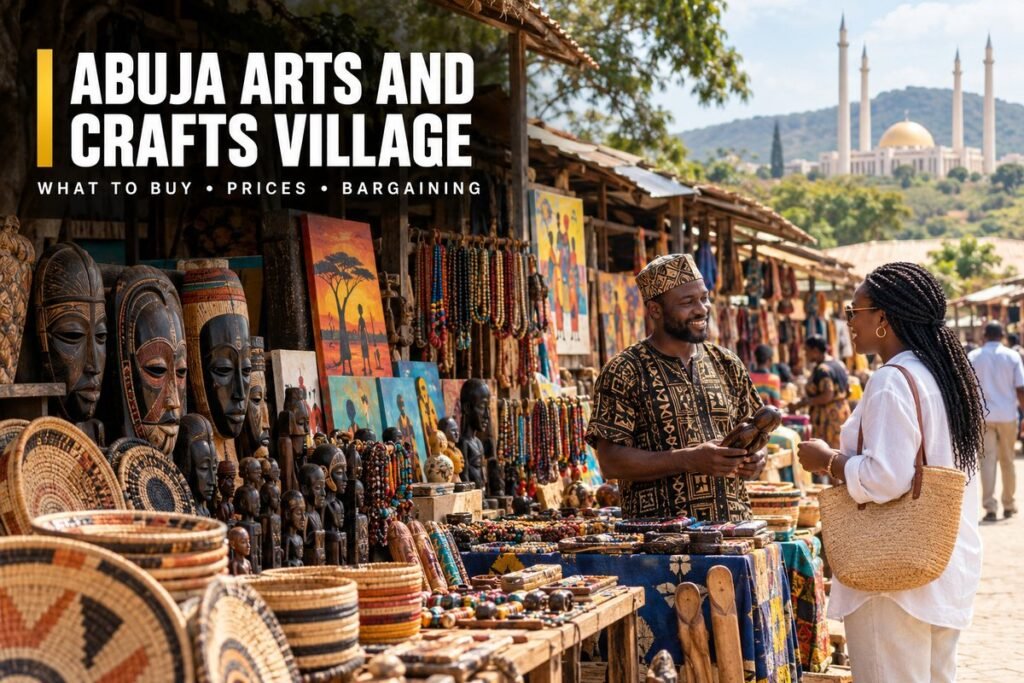
The Abuja Arts and Crafts Village is where the capital sells its own art, and about 140 shops line the grounds, many of them run by the people who carved the masks, mixed the paints and strung the beads. Prices start at a few hundred naira and climb to millions, so a visit works best with a plan.
This guide covers where the village is, what changed after a fire, what the shops sell, how to bargain and how to carry your purchases home. Prices vary by maker and by day, so treat each figure as a range and confirm the amount before you pay.
Where the Abuja Arts and Crafts Village Sits
The village is a government-run craft market under the National Council for Arts and Culture, in the centre of the city beside the Abuja Continental Hotel. If you search for the arts and crafts village abuja location on a map app, the hotel is the landmark that gets drivers there fastest.
For the art and craft village abuja address, give the hotel’s name to your taxi driver or ride-hailing app and let them find the entrance. If you are staying in Wuse, Maitama or Garki, the village is a short ride. Traffic in the Central Business District peaks at midday and on Fridays, so agree the fare before you go and ask the driver to wait or arrange a return pickup if you plan to stay an hour or more. Our guide to hotels in Abuja with prices helps you choose a base close to the centre.
| Item | What to expect |
|---|---|
| Location | Central Abuja, beside the Abuja Continental Hotel |
| Shops | About 140 |
| Price range | From about ₦500 to ₦2 million |
| Closing time | Vendors lock up at about 6 pm |
| Best for | Carvings, paintings, beadwork, jewellery and textiles |
You will hear the place called the abuja arts and crafts market, the craft village abuja visitors recommend, or simply the arts and crafts center abuja residents mention when they point out of town guests. It is the same place, and the hotel is the best landmark whatever the name.
The Fire and the Reopening
The village closed after an electrical spark in one shop spread through the market. The blaze destroyed artworks worth more than ₦50 million, and insecurity then kept the site shut for roughly five years. It reopened on 12 October with rebuilt shops in a more uniform structure, and further work has been planned on the perimeter fence, extra shops, new ceilings, doors and windows, and better lighting.
That history is visible when you walk through. The rebuilt shops look newer than the older stalls, and some parts of the grounds still need restoration. It also explains a theme you will hear from vendors: the abuja arts and crafts village depends on walk-in visitors, and the early 6 pm closing hurts sales, because office workers leave at about 5:30 and reach the gate just as the shutters come down. Go early, and your visit directly supports makers who have waited years for the footfall to return. The abuja arts and crafts village is still rebuilding its reputation, and every sale helps.
What the Shops Sell
At the abuja arts and crafts village, wood carvings of masks, figures and animals sit beside paintings in many styles, beadwork and jewellery, woven and printed textiles and decorative items for the home. The range runs from small souvenirs at around ₦500 to major pieces priced up to ₦2 million.
Small Gifts
For a quick gift, look at carved animals, beaded bracelets, key rings, fabric bags and small framed prints. They travel well in a suitcase and cost little. Decide beforehand how much you will spend on small things, because the variety makes it easy to overshoot. Keeping a separate budget for any larger piece stops a ₦2,000 browse from turning into a ₦200,000 impulse buy.
Paintings and Sculpture
Serious buyers will find larger canvases, sculptures and carved doors. Ask the artist about the materials, the story behind the piece and whether it is an original or a reproduction. A reputable seller answers without hesitation, and many will give a receipt. Visitors have noted that a painting bought here can cost less than a comparable work in a gallery or a market abroad, which makes the village a smart stop for anyone who wants to buy original Nigerian art on a budget.
Pieces That Need Planning
A carved door or a large canvas needs a plan before you pay. Ask whether the piece is solid wood or veneer, and whether it has been treated against insects, because some countries restrict untreated wood and a carving can cause trouble at an airport. Ask the seller to wrap fragile items, get a receipt for anything valuable and check your airline’s rules for oversized or fragile baggage. A seller who offers packing or delivery is worth a slightly higher price.
Questions to Ask a Maker
Good questions turn a purchase into a story you can retell. Ask what the piece is made from and how long it took. Ask which region the style comes from. Ask whether the artist signs their work, and whether they can make a similar piece to your size. Makers enjoy these questions, and the answers tell you how much of the price is skill and how much is markup.
Where the Craft Comes From
The village is the capital’s shop window for crafts that live elsewhere in Nigeria. Benin City’s Igun Street is known for lost-wax bronze casting, and the Dada Pottery Village in Ilorin is described as the country’s largest traditional pottery community, with hand-made pots and water jars. Neither is a day trip from Abuja, so this market is where you can compare the traditions side by side before you decide whether to follow a craft to its source. Treat the abuja arts and crafts village as a first stop for learning what you like, and plan a later trip if one style pulls you in.
Bargaining Like a Regular
Bargaining is normal here, and the best approach is friendly. Ask the price, respond with a lower offer, and settle somewhere in between. Sellers usually quote above their lowest price, so a polite counter-offer is expected.
- Carry small-denomination cash, because few vendors take cards.
- Compare similar pieces in three or four shops before you buy.
- Ask for the final price including any packing or delivery.
- Be polite if you decide not to buy, because the same artisans may happily talk about their work.
- Check items for cracks, loose joints and uneven finishing before you pay.
A workable pattern is to open about a third below the asking price, hold your ground politely and accept a middle figure. If a seller will not move, walk to the next shop and return later; prices often soften once you have shown you are comparing. Buying two or three items from one maker usually earns a better price than buying one.
Expect small charges at the gate for entry, parking or restrooms, and ask on arrival, since these can vary. Ask permission before photographing people or their work, and take pictures of the pieces you like before you decide.
Making an Afternoon of It
Go on a weekday morning or early afternoon, when the shops are open and the crowds are small. On a weekend, there are more visitors, which makes the atmosphere livelier but harder for browsing and bargaining. Allow at least an hour to browse and two if you want to compare sellers carefully. Wear comfortable shoes, carry water and keep your phone and cash in a bag you can hold in front of you.
The village sits close to other stops in the centre of town. Our list of beautiful and fun places to visit in Abuja suggests what to add, and our guide to the best restaurants in Abuja helps you plan lunch before or after. Pairing the market with a meal nearby fills the afternoon without a second long ride across the city.
Frequently Asked Questions About the Abuja Arts and Crafts Village
Where is the Abuja Arts and Crafts Village?
It is in central Abuja, beside the Abuja Continental Hotel, close to the Central Business District.
How much do items cost at the village?
Prices run from about ₦500 for small items to ₦2 million for major pieces.
What time does the village close?
Vendors lock up at about 6 pm, so go earlier in the day.
Can I bargain at the craft village?
Yes. Bargaining is normal, and a polite counter-offer is expected.
Planning Your Visit
Plan for a morning visit, carry cash, compare shops and agree on the price before you take anything away. The Abuja Arts and Crafts Village rewards patient visitors who talk to the makers and ask about their work, and it gives you a clear picture of Nigerian craft traditions in a single stop. Keep a record of the shop where you buy, in case you need to ask about shipping later.




Leave a Reply