

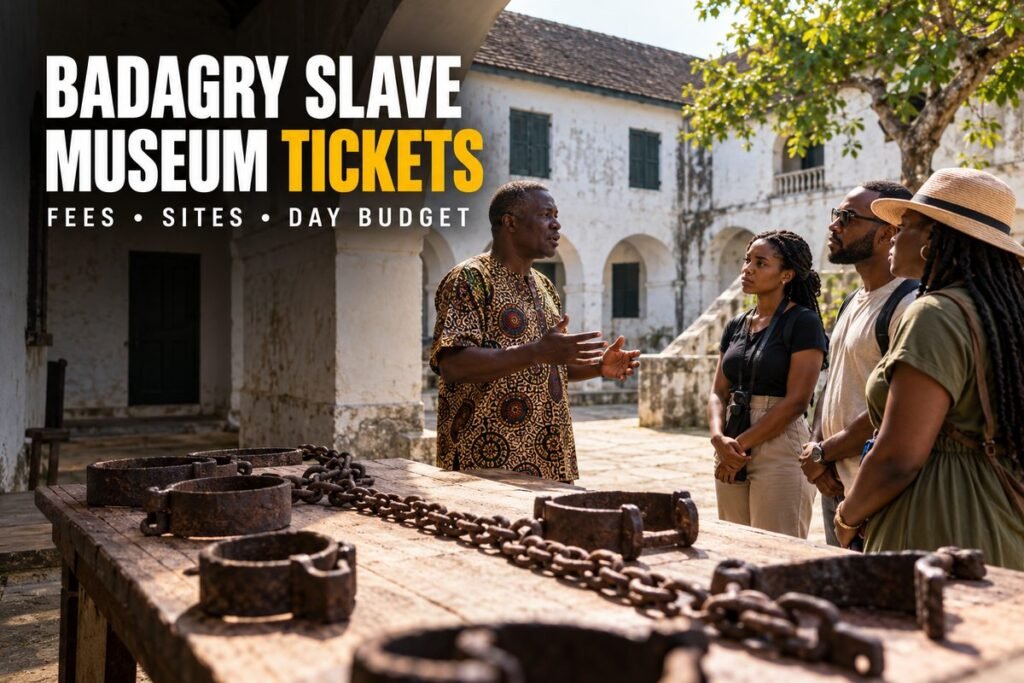
Badagry slave museum tickets are a small part of a visit that deserves proper planning, because the town’s slave-trade sites are spread along the waterfront and each one tells a different part of the story. Fees, boats and the journey from Lagos all add to the day, and the costs are not always easy to find.
This guide sets out the fees reported for each site, explains what the museums show, gives the location and the history, shows how to reach the Point of No Return and adds up a day budget from Lagos. Amounts come from visitor reports, so confirm them at each site.
Badagry Slave Museum Tickets at a Glance
Badagry sits about 69 km south-west of Lagos, and its slave-trade museums stand close together near the waterfront. Most charge a small gate fee, and some add a guide fee. No official price list is published, so every amount here is a traveller’s estimate that you should confirm at the gate.
| Item | Reported cost |
|---|---|
| Entry to the Heritage Museum | About ₦2,000 per person |
| Budget per site | About ₦2,000 per person |
| Five sites in a day | About ₦10,000 |
| Point of No Return, paid to the guardians | About ₦1,000 |
| Bike ride on Gberefu Island | About ₦1,000 |
| Boat to Gberefu | About ₦1,000 each way |
| Full day from Lagos, per person | About ₦70,000 |
Anyone who searches for the badagry museum gate fee or the badagry slave museum entry fee will find that these figures come from visitor reports and not from a published tariff. A badagry slave museum gate fee can also differ from one site to the next, so ask before you pay and keep small notes. The fee for badagry slave museum tickets is small beside the cost of getting there.
The Museums and What They Show
Badagry’s slave-trade story is told in several places, and each one shows something different, so the cost of badagry slave museum tickets buys a different view at every stop.
- The Mobee Royal Family Slave Relics Museum, in the old palace of the Mobee family, shows manacles, a branding tool and a punishment ring, with cannons outside. The grave of the slave merchant Sunbu Mobee is inside the compound, and the family still runs the museum.
- The Seriki Williams Abass Slave Museum occupies a barracoon built in the 1840s by Brazilian slave merchants. It had about 40 cells, though only two are open to visitors at a time. A wax figure, a courtyard well and a mausoleum are part of the tour, and parts of the property are still lived in by the family.
- The Vlekete Slave Market Museum stands on the site of a slave market. One account dates an older building on the site to the early 1500s, and a newer museum was added by the Lagos State Government.
- The Badagry Heritage Museum, on Lander Road near the Marina, holds artefacts and documents on the slave trade and on the town’s heritage. It is listed as open daily from 9 am to 5 pm, but confirm before you travel.
Two non-slavery sites are worth adding: the First Storey Building, built in the 1840s by the Church Missionary Society, where Samuel Ajayi Crowther worked on the Yoruba Bible, and the Agia Tree Monument, which marks where Christian preaching is said to have begun in the town.
Pictures and Photography
Visitors who search for badagry slave museum pictures are usually looking for the shackles, chains, branding tool and cannons at the Mobee museum and the cells at the Seriki barracoon. Ask at each site whether photography is allowed or charged, and do not photograph people without their consent. The Badagry Heritage Museum is also worth a look for its documents and artefacts, and it helps to read the labels before the tour so that you know what you are seeing.
Which One First
If you can visit only one, choose the Seriki Williams Abass barracoon for the scale of its cells and the story of the family, or the Mobee museum for its objects. The Heritage Museum is the best place for context, and our guide to museums in Nigeria lists other collections to pair with it.
Badagry Slave Museum History
Badagry was one of the points on the coast from which enslaved people were shipped to Europe and the Americas. Captives were held in barracoons and then taken by water towards Gberefu Island. The museums preserve the objects, the buildings and the family histories of that era, and the guides tell the stories orally.
Anyone who searches for the badagry slave museum history should expect a guided telling that mixes documented facts with family memory. Ask your guide which parts are from records and which are recollections. The story is painful, and the sites are best visited with time and respect, with mobile phones put away during the guided tour.
Badagry Slave Museum Location
Readers often ask about the badagry slave museum location. Most of the sites stand on and near the Marina Road in the old part of Badagry. The Seriki barracoon is near the post office, and the Heritage Museum is on Lander Road. Because the sites are a short distance apart, you can walk or take a short bike ride between them. Our guide to Lagos ferry routes shows the jetties that serve the town.
From Lagos by Road
By road, Badagry is about an hour and a half from Ikeja in light traffic, and traffic can add a great deal. Travel early, and consider a local guide, who will lead you to the sites and explain their stories.
From Lagos by Boat
Many visitors take a boat. Our guide on Lagos to Badagry by boat explains the options. A direct banana boat is reported at ₦10,000 to ₦15,000, while splitting the trip through a different jetty can cost about ₦7,000 plus ₦4,000 to ₦5,000. A private speedboat for ten people is reported at about ₦450,000 for the round trip. The ferry station at the CMS jetty is open all week from 6 am to 6 pm, and the Ebute Iro station runs Monday to Saturday.
The Point of No Return and Gberefu
The Point of No Return lies on Gberefu Island and was the departure point for enslaved people who were shipped to Europe and the Americas. A boat from Badagry takes about five minutes, and you then walk or ride a bike across the sandy island for about twenty minutes. The guardians collect about ₦1,000, the bike ride costs about ₦1,000 and the boat costs about ₦1,000 each way. A tunnel at the site is under construction.
A traditional well at the site is said to have made captives forget their past. Plan your timing around the boats. Aim to be back at the Badagry jetty by 3 pm, because boats are hard to find after 5 pm and the water police do not allow boats on the water after 6 pm.
A Day Budget From Lagos
Adding the reported costs gives a picture of a day’s spending for one person.
| Cost | Estimate |
|---|---|
| Ride to the CMS jetty | ₦7,000 to ₦8,500 |
| Boat to Badagry and back | ₦10,000 to ₦12,000 |
| Entry to five sites | About ₦10,000 |
| Point of No Return, bike and boat | About ₦4,000 |
| Food, water and small extras | Rest of the budget |
A travel blogger puts the total at about ₦70,000 per person. Your own cost will depend on how you travel and how many sites you visit. Notice that five sites at about ₦10,000 are only about one-seventh of the day’s spending, so the badagry slave museum tickets themselves are the cheap part, and the boat, the road and the food make up the rest. A raincoat costs about ₦300 and is worth carrying in the wet season.
The boat is the one cost you can share. A private speedboat reported at ₦450,000 for ten people works out at ₦45,000 each, which is well above the ₦10,000 to ₦15,000 reported for a shared banana boat, so the private option only makes sense for a group that wants its own schedule. Whichever way you travel, ask what the badagry slave museum tickets at each stop include, such as a guide, before you hand over any money.
Frequently Asked Questions About Badagry Slave Museum Tickets
How much are Badagry slave museum tickets?
About ₦2,000 per person per site, according to visitor reports. The Point of No Return costs about ₦1,000 plus a bike ride and a boat.
Where is the Badagry slave museum?
In Badagry, about 69 km south-west of Lagos, with most sites on and near the Marina Road.
Can I see pictures of the exhibits?
Ask at each site whether photography is allowed or charged. The sites display shackles, chains, a branding tool and cannons.
Is there one ticket for all the museums?
No. Each site sets its own fee.
Before You Go
Carry small notes, agree any guide fee before the tour and keep your phone and valuables safe. Confirm opening hours on the day, plan your return boat for the afternoon and leave Lagos early. Badagry slave museum tickets are cheap compared with the importance of what the sites preserve, and a visit rewards patient listening. Treat the guides’ stories with respect, and buy from local vendors to support the community. Take enough cash for every fee, since card machines are not reliable at small sites.




Leave a Reply