

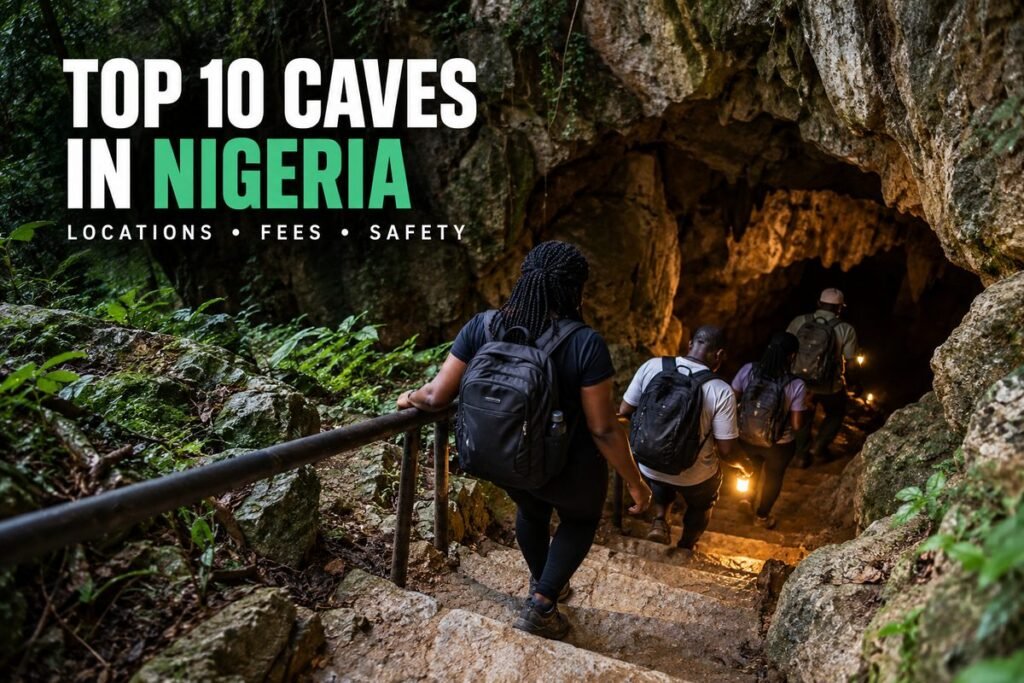
Caves in Nigeria are less famous than the country’s beaches and waterfalls, but several are old, large and easy to visit. Some were shelters for early people, some were refuges in wartime, and some are still tied to local festivals and customs.
This guide gives a list of the main caves, their locations and what makes each one worth the trip, then looks more closely at Ogbunike and the caves near Enugu. It also covers the best season, the fees that have been reported and the safety advice that matters underground. Most caves have no published tariff, so ask on arrival.
Caves in Nigeria at a Glance
Anyone wondering are there caves in nigeria can be told yes, and the best known are in the south-east, where sandstone and limestone hills hold long passages and chambers. Others lie in the south-west, the south-south and the north-east. The country has no single national cave authority, so access is managed by local communities, state tourism boards or park management, and conditions vary a great deal.
The table gives a quick idea of what to expect.
| Feature | What to expect |
|---|---|
| Best-known cave | Ogbunike, in Anambra State |
| Longest staircase | About 317 steps down at Ogbunike |
| Waterfall and cave together | Awhum, in Enugu State |
| Best season | The dry season, from about November to March |
| Fees | Few are published, and reports range from a few hundred naira to ₦3,000 |
| What to bring | A torch, grip shoes, water and a change of clothes |
Visits are usually short, from an hour at a small cave to half a day at a large one, so many travellers pair a cave with another stop. Our guide to places to visit in Anambra State and our guide to places to visit in Enugu show what else lies nearby.
Caves in Nigeria and Their Location
This list of caves in nigeria is a selection of ten that visitors can reach, and it is not a ranking. The popular caves in nigeria are mostly in the south-east, but the older sites are further afield.
| Cave | State | Location and note |
|---|---|---|
| Ogbunike Caves | Anambra | Near Ogbunike, close to Onitsha; ten tunnels and a long staircase |
| Owerre-Ezukala Cave | Anambra | Orumba South, about 75 km east of Onitsha; four rock shelters and two waterfalls |
| Awhum Caves | Enugu | Udi area, about 24 to 30 km from Enugu; a waterfall of over 30 m |
| Ezeagu or Ihu-ogba Caves | Enugu | Ezeagu complex, with a lake and a waterfall nearby |
| Fugar Caves, Edegbake and Oghodoghodo | Edo | Near Fugar, Etsako Central; two prehistoric sites |
| Iho Eleru | Ondo | About 24 km south of Akure; a cave of archaeological importance |
| Esa Caves | Ekiti | About 20 km from Ado-Ekiti |
| Amanchor Cave | Ebonyi | Afikpo South; linked to an annual festival |
| Marshall Caves | Bauchi | Inside Yankari Game Reserve |
| Olumo Rock caves | Ogun | Abeokuta; three main caves in the rock |
Anyone planning a trip around the top 10 caves in nigeria should note that the south-east group can be done in a long weekend, while the others need separate journeys.
Ogbunike Caves
Ogbunike is the most visited of the caves in Anambra State and the best known in the country. A long flight of about 317 steps, built by the state government in the mid-1990s, leads down to the entrance chamber, which is about 5 m high, 10 m wide and 30 m long. Ten tunnels lead from it, and a stream flows out to the River Nkissa, where the warm water from the cave meets the colder river.
History and Customs
The caves were a refuge during the civil war, and the community holds the Ime Ogbe festival there each May. Visitors are expected to remove their shoes, and a local custom bars menstruating women from entering, so ask the guides about the rules. Bats live in the chambers, and a medical study has linked bat droppings in some caves to a lung infection, so wear a mask in dusty passages and wash your hands afterwards.
Fees and Hours
A listing gives adult entry at ₦3,000, a guide at ₦1,000 and a group rate of ₦5,000 to ₦10,000. The same listing gives opening hours of 8 am to 5 pm from Monday to Saturday and 11:30 am to 5 pm on Sunday. Treat those figures as older, since the listing is not dated, and confirm them at the gate. There is no lighting inside, so bring a torch. The site is on the UNESCO tentative list, which means it has been proposed but not inscribed. A visitor can expect about 40 other people on an average day and up to 200 on holidays, so a weekday morning is calmer.
Caves in Enugu
People searching for caves in enugu are usually looking for Awhum and the Ezeagu group.
Awhum Caves
Awhum is in the Udi area, about 24 to 30 km from Enugu city. The drive takes 45 minutes to an hour, and then a trek of about 45 minutes leads to a waterfall of more than 30 m that drops into a pool. A cave beside the fall has narrow passages, and a monastery stands nearby. A recent post puts the fee at ₦500 to ₦1,000. The best months are the dry ones, from November to March, because the path and the rocks are slippery in the rainy season. The warm water is believed locally to have healing powers, but there is no medical proof, so treat that as a belief and not as advice.
Ezeagu or Ihu-ogba Caves
The Ezeagu complex includes two narrow tunnels and three chambers, found during the civil war, together with the Iheneke Lake and the Ogbagada Waterfall. It is a good choice for a visitor who wants a mix of lake, waterfall and cave in one trip. Ask the local guides about the route and the price, because no tariff is published.
Historical Caves in Nigeria
The historical caves in nigeria include some of the oldest evidence of human life in the region.
- Iho Eleru, or Cave of Ashes, lies about 24 km south of Akure in Ondo State. An excavation in the 1960s found human bones that were dated to before 8000 BC, which makes it important to archaeologists.
- Edegbake and Oghodoghodo near Fugar in Edo State are prehistoric caves, and they are said to hold about 50 and 200 people respectively.
- Esa Caves, about 20 km from Ado-Ekiti, have rooms for 30 to 40 people.
- Amanchor Cave in Afikpo South, Ebonyi State, is linked to the Orie-Ogba festival in December. One source says it is about 4 km long, with a 6 m entrance and a wooden ladder, so check the details with a local guide before you go.
- Marshall Caves are inside Yankari Game Reserve in Bauchi State, and Yankari’s park rules apply there.
- Olumo Rock in Abeokuta has three main caves in the rock, and our guide to Olumo Rock explains the climb and the history.
A Weekend Route in the South-East
The south-east group suits a two-day plan. Spend the first day on Awhum from Enugu, starting early so that the trek is done before the heat, and the second on Ogbunike near Onitsha, where the staircase and the tunnels fill a morning. Owerre-Ezukala adds a third stop if you have a driver and a free day, but it is about 75 km east of Onitsha, so check the road before you commit. Book a driver for the whole weekend, agree the price in writing and carry small notes for the guides at each site.
Safety and What to Bring
Caves are dark, damp and uneven. Wear shoes with a good grip, carry a torch and a spare light, and take water. Keep to the guided route, and do not enter passages that the guide closes. Do not touch bats or disturb the walls, and carry out your litter.
Check the weather first, because a cave that is easy in the dry season can flood or become slippery after rain. Tell someone where you are going, and keep a phone in a waterproof bag. Pay the agreed fee to the person who issues a receipt, and ask whether a guide is compulsory. Children and older visitors should be able to manage steps, and a staircase of 317 steps is a hard climb back up.
Pay respect to local customs. Many caves are sacred sites, and festivals and rites can close them to visitors on certain days. Ask before you take photographs, and do not remove stones or other objects.
Frequently Asked Questions About Caves in Nigeria
Are there caves in Nigeria?
Yes. The best known are Ogbunike in Anambra State and Awhum in Enugu State, and there are older sites in Edo, Ondo, Ekiti and Ebonyi.
How much does it cost to visit?
Reports range from ₦500 to ₦1,000 at Awhum to ₦3,000 plus ₦1,000 for a guide at Ogbunike, and many caves publish no fee.
When is the best time to go?
The dry season, from about November to March.
Do I need a guide?
Usually yes. Guides know the routes and the customs, and they keep the group safe.
Before You Go
Pick one cave, check the route and carry cash for fees and guides. Caves in Nigeria reward patience, and the best visits are the ones that start early and leave time for the climb out. Respect the customs, protect the formations and tell someone where you are going.




Leave a Reply