
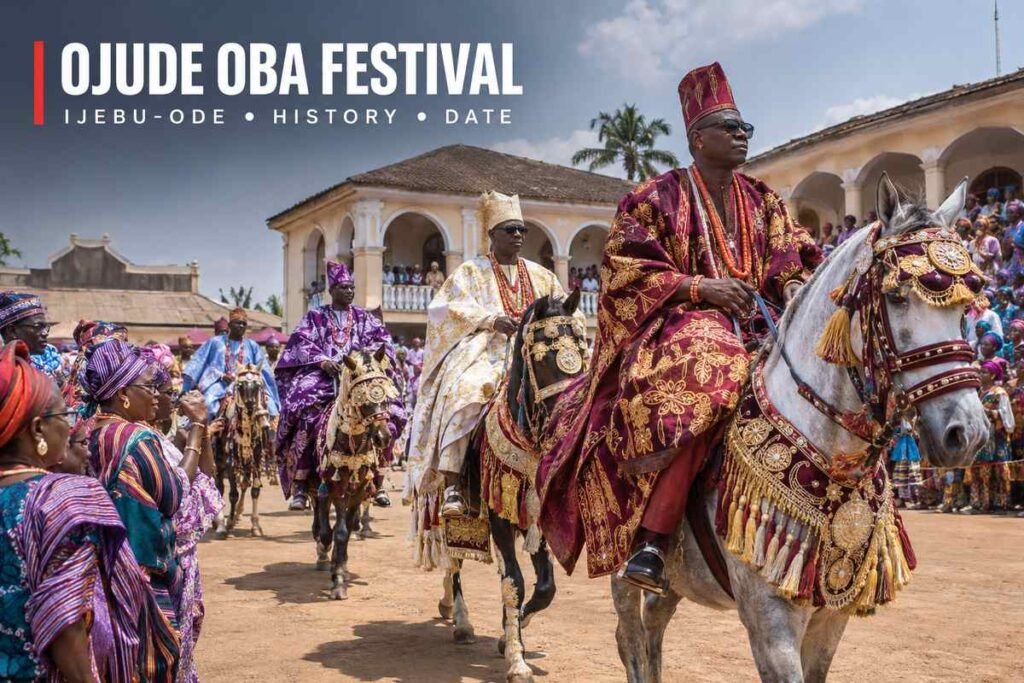
Once a year, the streets of Ijebu-Ode fill with horsemen, drummers and thousands of people dressed in their finest cloth, all heading for the same open space. The Ojude Oba Festival is one of the largest cultural gatherings in south-west Nigeria, and it is a day when fashion, faith and family loyalty meet in a single procession.
Below you will find where the festival came from, when it falls, what happens from the first prayer to the last gunshot, and how to plan a visit with the crowds in mind. The sources agree on the shape of the day but differ on names, dates and attendance, so I mark each gap and give the range where the figures vary.
Ojude Oba Festival at a Glance
The name means the King’s forecourt. The festival takes place at the palace of the Awujale, the paramount ruler of Ijebuland, in Ijebu-Ode, a town in Ogun State. It falls on the third day after Eid al-Kabir, known in Yoruba land as Ileya, so it moves each year with the Islamic calendar.
| Point | What the sources say |
|---|---|
| Place | The Awujale’s palace forecourt, Ijebu-Ode |
| Timing | Third day after Eid al-Kabir |
| Honours | The Awujale of Ijebuland |
| Highlights | Age grade parades, horsemen, best-dressed contest |
| Crowd | From over 250,000 to about a million, by claim |
| Entry fee | None known |
The festival is a one-day event, and it is now enjoyed by Muslims, Christians and followers of traditional faiths alike. Ojude Oba has become a secular celebration of Ijebu identity, and many families who live in other cities travel home for it.
Ojude Oba Festival History
The story begins with an older rite, the Odeda festival. Tradition holds that in the late nineteenth century a war chief named Balogun Kuku left Christianity for Islam after a dispute with missionaries over polygamy. He began a procession to the palace to greet the king, and the custom of gathering at the Ita-Oba, the King’s square, grew into what we now call Ojude Oba. The ruler of the day welcomed the gesture, and the event was repeated each year.
Sources differ on which Awujale reigned at the time and on the exact dates, so I do not name a ruler or a year. What is agreed is that the festival began as a gesture of respect and turned into a yearly parade. It was cancelled for two years because of the coronavirus pandemic, then resumed. An account of the Ojude Oba festival history that gives a single precise date for its start should be read with caution.
From Local Rite to National Event
Among the cultural events held across Ogun State, the ojude oba festival in ogun state is one of the best known, and lists of Nigerian festivals often place the ojude oba festival nigeria visitors travel for beside Osun-Osogbo and Argungu. Over the decades the event outgrew the town. Age grades, Muslim societies and Balogun families all joined the procession, and the diaspora began to plan holidays around it. Today it draws visitors from across Nigeria and from abroad.
Ojude Oba Festival Date
The Ojude Oba festival date is not fixed on the calendar. The festival happens on the third day after Eid al-Kabir, which depends on the sighting of the moon, so the exact day is confirmed only a short time ahead. By my own estimate, the next edition is likely to fall in the middle to the third week of May next year, but treat that as a rough guess and not an announcement.
To plan, watch for the Eid announcement, then count three days from the festival of the feast. Book transport and rooms as soon as the window is clear, because Ijebu-Ode has a limited number of hotels, and they fill fast. Our guide to hotels in Ijebu-Ode lists the options.
The Ojude Oba Festival in Ijebu Ode: The Day Itself
The programme follows a clear order, and knowing it helps you decide where to stand. The Ojude Oba festival ijebu ode crowds see begins with prayer and ends with horsemen, and in between the day is a parade of the town’s social groups.
Prayers and Anthems
The day opens with an invocation by the Imam, followed by the national anthem, the Ogun State anthem and the anthem of the Awujale. The king then takes his seat before the crowd.
The Age Grades
The heart of the day is the parade of the regberegbe, the age grades. Each group is made up of men and women born within the same window of about three years, and each has its own name, dress, dance and style of greeting. Among the groups named in the sources are Gbobaniyi, Gbobaleye, Bobagunte, Arobayo, Mafowoku and Jagunmolu. Each group presents gifts to the king, and members often wear matching aso-oke, gold jewellery and elaborate caps. A best-dressed contest adds to the competition.
The Horsemen
The Baloguns, the ruling families descended from the war chiefs, close the programme with their horsemen. They ride in decorated robes on richly adorned horses and fire muskets as they pass the king, to a roar of applause. The gunfire is loud, and the horses are large, so stay behind any barrier and keep children close. The display recalls the days when the Baloguns were war chiefs, and the families still treat the ride as a matter of pride. Spectators who stand near the route should expect dust, noise and sudden movement, and should never step in front of a horse to take a photograph, however good the angle looks.
Ojude Oba Festival Pictures and What to Photograph
Many people first meet the festival through its photographs, and the Ojude Oba festival pictures that circulate each year show why. The strongest images are of the age grades in matching cloth, the horsemen against the palace walls and the faces of the crowd.
A Sample Day Plan
No source gives a start time, so ask a local contact and assume a morning start. A workable plan is to leave Lagos before dawn, reach Ijebu-Ode while the roads are still clear, find a spot near the forecourt and settle in for the prayers. Stay for the age grades, then watch the horsemen, and head back only when the crowd begins to thin. Agree the return time with your driver before you leave, and keep your phone charged.
Costs to Plan For
I found no published prices, so list the costs you will meet yourself: transport, a room if you stay overnight, food, small gifts and any cloth you choose to buy. Set aside a reserve for the unexpected, since prices in a crowded town rise on the day. Agree each fare before you start, and carry small notes.
Photography Tips
Arrive early for a good spot, wear a hat and carry water, since the sun is hot and the crowd is dense. Ask before you photograph an individual, especially elders and women in formal dress, and keep a firm grip on your camera or phone. Do not fly a drone without permission, because large gatherings are often subject to security rules, and the palace may have its own.
What to Wear
Dress neatly, in clothing that suits the heat. Many visitors wear aso-oke or adire, and wearing a local fabric is a sign of respect, though nobody expects a stranger to match the age grades. Comfortable shoes matter more than a perfect outfit, because you will stand and walk for hours.
Getting There and Planning a Visit
Ijebu-Ode is roughly 110 km from Lagos, which is my own approximate figure for the road distance and not one from the sources. Many visitors go by road, and traffic builds up near the town as the day approaches. Leave early and plan to stay overnight, or arrange a firm return time with a driver. No source I read gave fares, ticket prices or accommodation rates, so budget on the high side and agree prices before you go.
Food is part of the day. Our page on the best and affordable restaurants in Ijebu-Ode is useful for a meal before or after the crowds, and our guide to the places to visit in Abeokuta is a good second stop on the same trip.
Staying Safe in the Crowd
Keep valuables in a front pocket or a zipped bag, share your live location with a friend and agree a meeting point in case you are separated. The crowd is large and the ground can be uneven. If you feel unwell, step away to a quieter area and drink water.
Frequently Asked Questions About the Ojude Oba Festival
What Is Ojude Oba?
It is an annual one-day festival in Ijebu-Ode, Ogun State, held at the Awujale’s palace forecourt on the third day after Eid al-Kabir.
When Is the Next Edition?
It follows the Islamic calendar, so the date moves. My estimate is the middle to the third week of May next year, subject to the moon sighting.
Do You Need a Ticket?
None is known. The festival is a public gathering, but ask local organisers about any seating areas.
Who Takes Part?
Age grades, Muslim societies, Balogun families and the public, who come from every faith and many cities.
Before You Go
Wait for the Eid announcement, book a room early and plan to arrive well before the parade starts. Bring water, small notes and a charged phone, and respect the elders and the horsemen. A day at Ojude Oba is one of the best ways to see Yoruba culture at full scale.



Leave a Reply